Plate 29 · Light & Sound
A Curved Piece of Glass
Light bends slightly as it passes from air into glass. Grind the glass thick in the middle and thin at the edges, and all the light bends towards a single point. Magnifying glasses, cameras, telescopes and the lens inside your eye all work this way.
Scroll
Light Takes a Turn
Light travels more slowly in glass than in air. So a beam that enters glass at a slant bends a little closer to straight-on, and bends back as it leaves. This is refraction.
How much it turns follows an exact rule, Snell’s law: light that meets ordinary glass 45° away from straight-on continues only about 28° away.
Rays traced surface by surface with Snell’s law
Coming to a Point
A convex lens is thick in the middle and thin at the edges. The nearer its edge a ray strikes, the more steeply tilted the glass, and the more the ray turns — so parallel rays all turn towards one point, the focus.
The distance from the lens to the focus is the focal length. The more strongly the lens is curved, the shorter its focal length and the more sharply it bends light.
An Upside-Down Picture
Light from each point of an object passes through the lens and gathers again at one point on the other side, as long as the object is farther away than the focus. Together those points make an image — upside down.
Bring the object closer to the lens and the image moves farther away and grows. Cameras and projectors focus by moving the lens nearer to or farther from the sensor or screen.
The Lens in Your Eye
Your eye makes images the same way: the cornea and the lens together bring light to a focus on the retina at the back, where it forms a small upside-down picture, which your brain has learned to read the right way up.
The eye focuses with about 60 dioptres, like a single lens with a focal length of about 17 millimetres. To look at something close, the lens inside it thickens a little to shorten its focus.
The eye in cross-section, schematic
Short Sight and Glasses
If an eyeball grows a little too long, light from far away comes to a focus in front of the retina and has spread out again by the time it gets there, so distant things look blurry. This is short sight, or myopia. An eye just 1 millimetre too long needs glasses of about −3 dioptres.
Glasses for short sight are concave lenses, thinner in the middle than at the edges. They spread the light slightly so the eye brings it to a focus right on the retina. By 2050, about half the people in the world are expected to be short-sighted.
Your Turn
Change how strongly the lens curves and where the object stands, and watch the focus and the image move: bring the object close to the focus and the image rushes far away and grows huge.
Try thisPut the object at twice the focal length: how big is the image, and which way up?
What the model leaves out
The rays are traced in a flat slice, with Snell’s law at each surface, so they show a real lens’s small flaw: rays near the edge come to a focus slightly sooner. This is spherical aberration. Different colours bend by slightly different amounts, which isn’t drawn here. The eye is simplified, with the cornea and lens combined into one lens. Real eyes are filled with fluid, so each extra millimetre needs about −3 dioptres; our simpler model eye needs a little more.
A common misreading
A lens doesn’t pull light towards its centre, and it isn’t only the middle that matters. Every part of the lens bends light towards the focus, so covering half a lens doesn’t cut away half the image — it just makes it dimmer. And wearing glasses of the right strength doesn’t make your eyes “lazy” or your myopia worse.
Sources
Follow the question
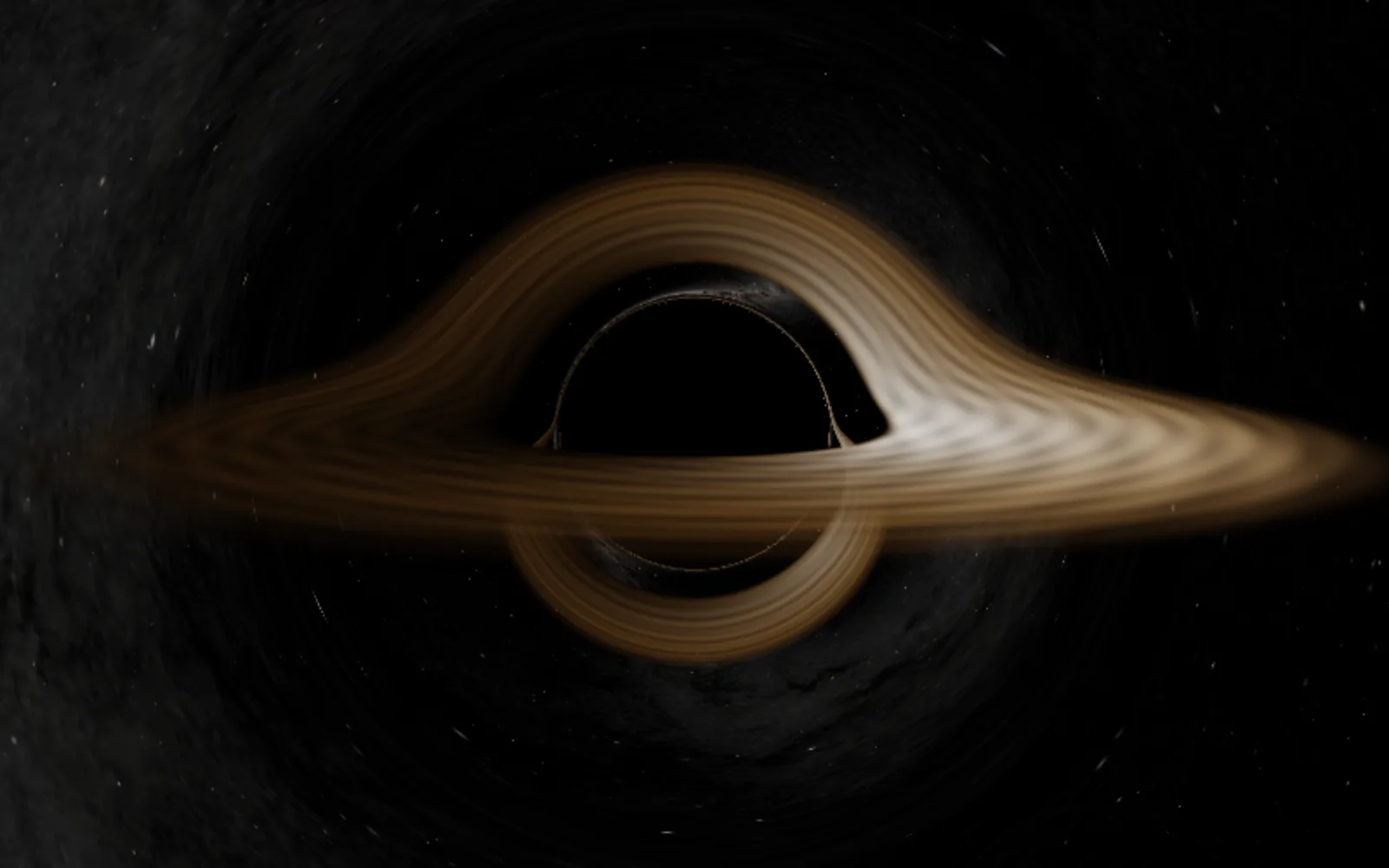 Plate 38Where Not Even Light EscapesA black hole packs so much matter into so small a space that not even light can get out. It is dark itself, but the light it bends around it draws a bright ring.
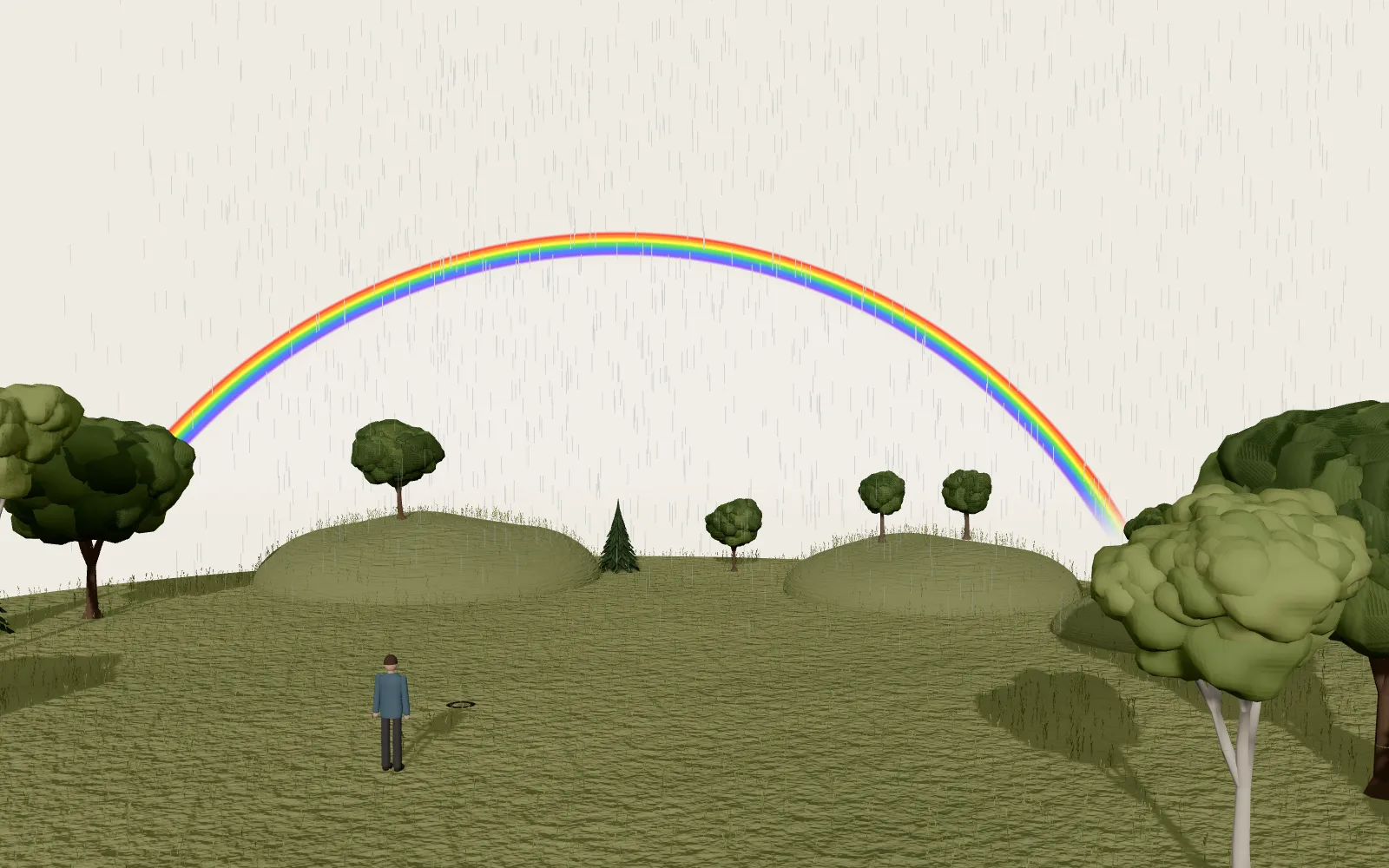 Plate 07Why a Rainbow Is RoundIt does not hang anywhere in the sky. It is a ring of light 42 degrees around the shadow of your own head.