Plate 23 · Earth
Where a Compass Points
A compass needle doesn’t point at the North Pole. It lines up with the Earth’s magnetic field, and the north magnetic pole lies hundreds of kilometres from the North Pole and keeps moving: in recent decades it has been racing from northern Canada towards Siberia.
Scroll
A Little Magnet That Turns
A compass needle is a small magnet balanced on a point so it can turn freely. The Earth itself acts like a giant magnet, with a magnetic field all around it. A small magnet in that field turns until it lines up with it.
Nudge a compass and the needle swings past, wobbles back and forth a few times, and settles where it was.
A compass, schematic · tap it to nudge the needle
Invisible Field Lines
If you could see the Earth’s magnetic field, it would look like loops rising out of the Southern Hemisphere and curving back down into the Northern. A compass needle always lies along those loops.
Strangely enough, the end of the Earth that attracts the “north” end of a compass needle is, magnetically, a south pole. We just call it the north magnetic pole.
Magnetic North Isn’t True North
The magnetic pole and the geographic North Pole are in different places. So in most places a compass points a little to one side of true north. The difference is called declination.
In some places it is ten or twenty degrees or more. Planes, ships and the maps on your phone correct for it with the World Magnetic Model, updated every five years.
A Pole That Walks
In 1831 the British explorer James Clark Ross found the north magnetic pole in northern Canada. It has been moving ever since.
For centuries it crept along, rarely faster than 15 kilometres a year. Around 2000 it suddenly sped up to more than 50 kilometres a year, crossing the Arctic Ocean towards Siberia. In the last few years it has slowed down again.
Position of the north magnetic pole · 1590 to 2025 · NOAA
A Dynamo Deep Inside
The Earth’s magnetic field comes from the outer core, about 2,900 kilometres down. It is molten iron and nickel, churned by heat and swirled by the Earth’s spin. Moving metal carries electric currents, and like a giant dynamo those currents make the field.
The flows keep changing, so the field changes too. Many times in Earth’s history, the field has flipped right over; the last time was about 780,000 years ago.
Your Turn
Drag through the years, or run them, to follow the north magnetic pole across four centuries and see how fast it moved each year.
Try thisWhen did the north magnetic pole move fastest, and how many km a year?
What the model leaves out
The field lines are drawn as those of an ideal bar magnet. The real field is messier, so a compass doesn’t point exactly at the magnetic pole; it follows the field where it is. The pole’s positions before 1900 come from a model rebuilt from old ships’ logs, and the earlier they are, the less certain. So in the picture the lines meet at one point, the geomagnetic pole, while the real magnetic pole, drawn on its path, sits more than a thousand kilometres away.
A common misreading
A compass doesn’t point to the North Pole. It points along the local magnetic field, roughly towards the north magnetic pole. Close to the magnetic pole, the field points almost straight down and its sideways pull is weak, so a compass is hardly any use for finding north.
Sources
- NOAA NCEI: Wandering of the geomagnetic poles
- NOAA: The World Magnetic Model
- British Geological Survey: The Earth’s magnetic field
- British Geological Survey: Geomagnetic reversals
- USGS Geomagnetism Program
Data
North magnetic pole positions: NOAA National Centers for Environmental Information (gufm1 and IGRF field models). Elevation and seafloor (globe colors): Terrain Tiles on AWS Open Data; ETOPO1, NOAA; GMTED2010 and SRTM, USGS.
Follow the question
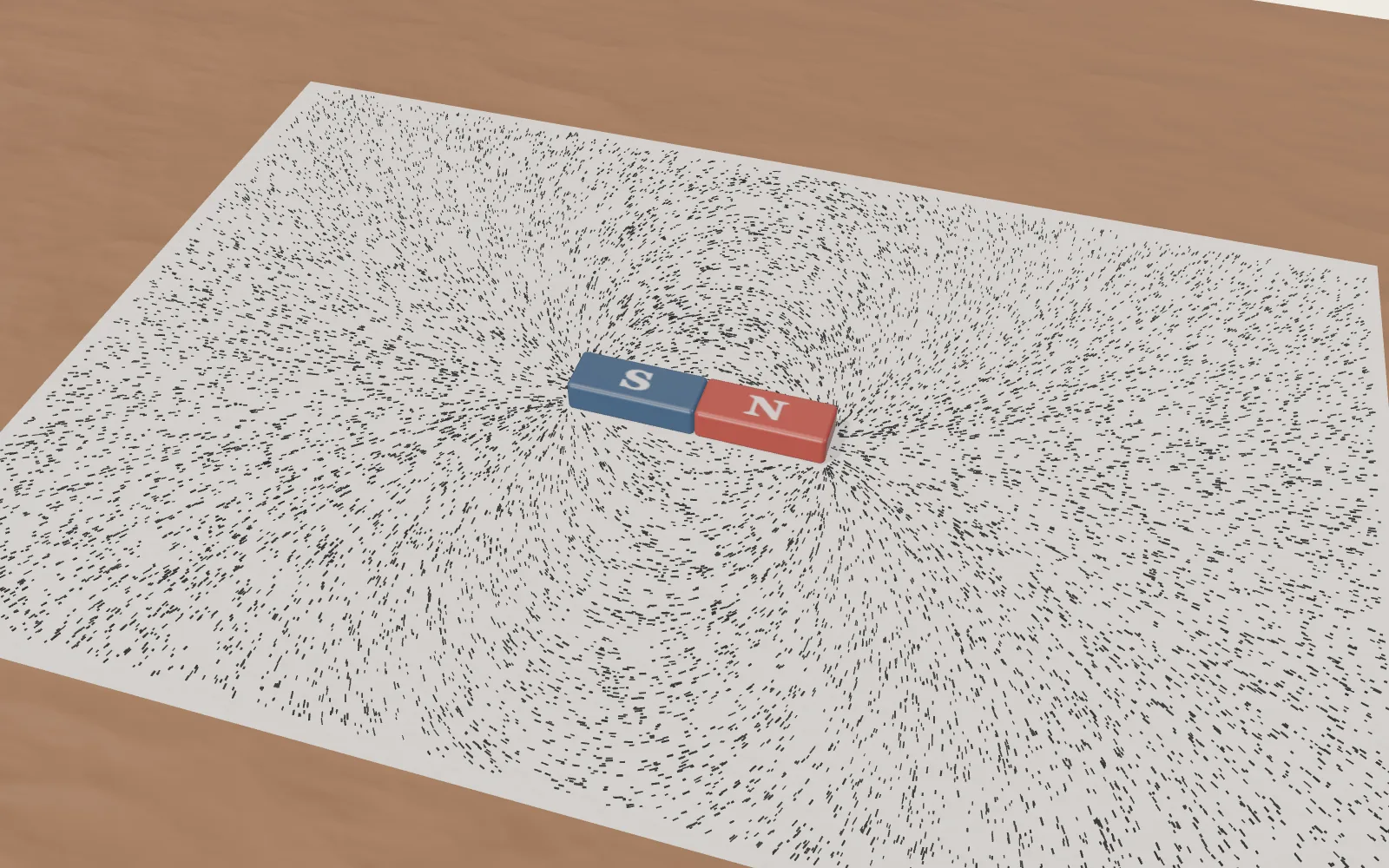 Plate 39The Invisible Lines Around a MagnetLay a sheet of paper over a magnet, sprinkle iron filings on it and tap gently: the filings line up in curves running from one end of the magnet to the other. They are drawing the shape of its magnetic field.
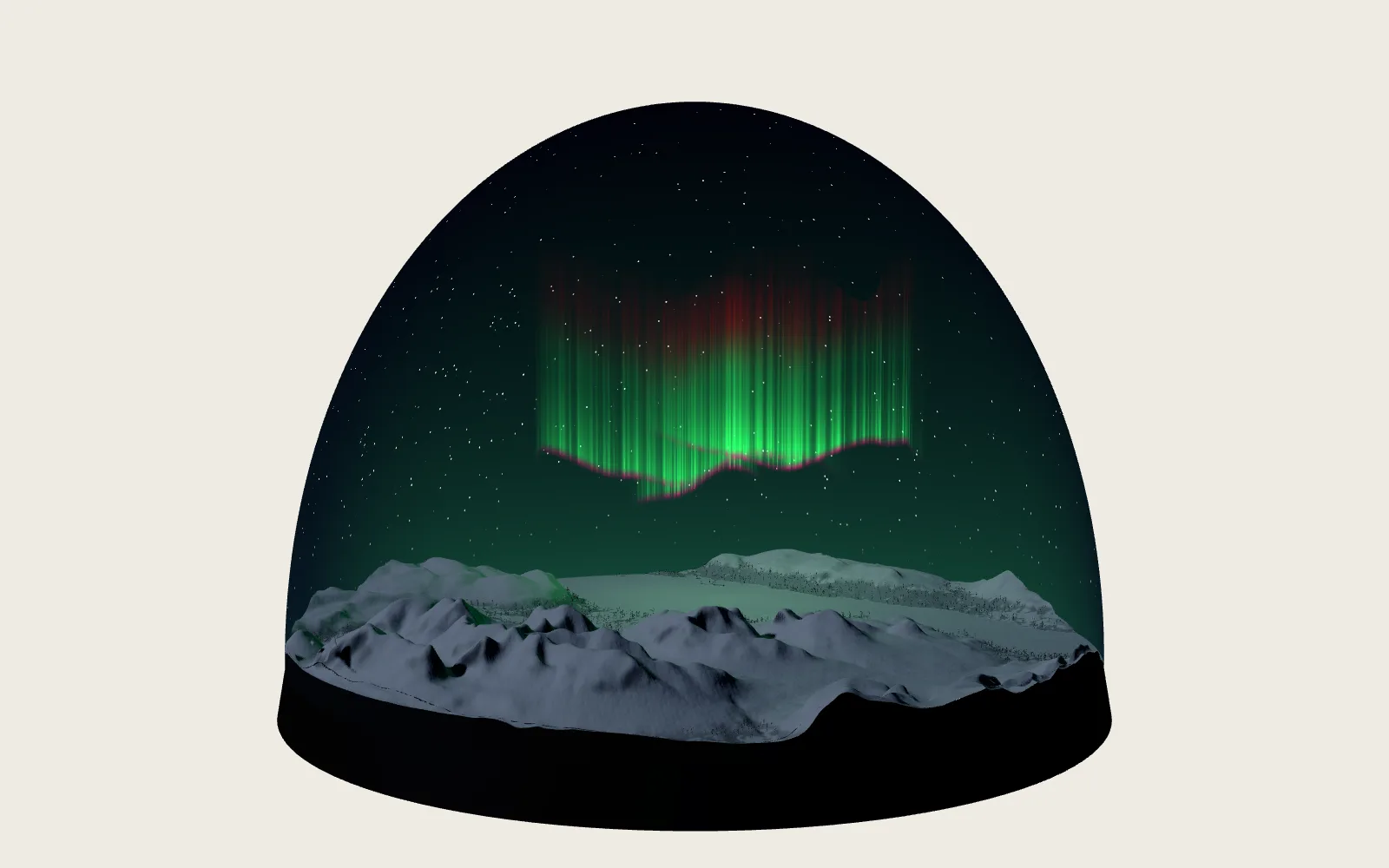 Plate 11Curtains in the SkyAn aurora is light given off when electrons from space crash into the air high overhead.